StoryLocal news
Faber concedes the Ohio attorney general's race as Democrats take three of four row offices
Kulewicz leads by 28,407 votes, about two and a half times the line for an automatic statewide recount, which means Faber's concession settles the closest statewide race of the night and hands a Democrat the office defending Ohio in Kalshi's federal case.
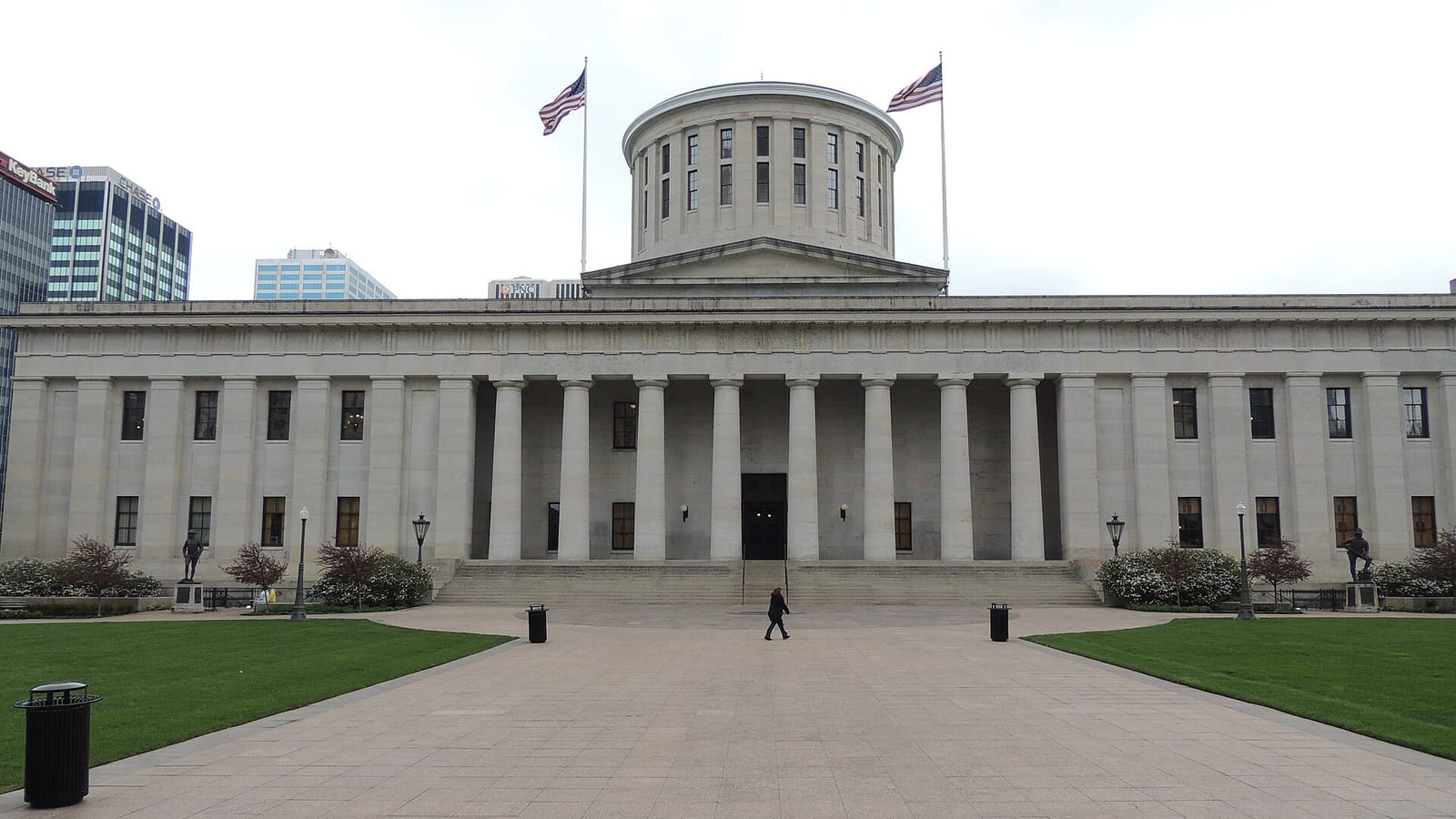
Democrat John J. Kulewicz will be Ohio's next attorney general after Republican Keith Faber conceded the race on Wednesday morning, November 4, Kulewicz said in a statement reported by the Ohio Capital Journal, and the Ohio Secretary of State's unofficial results, read at 9:55 a.m. Eastern on November 5, 2026, show him ahead by 28,407 votes out of more than 4.5 million cast. It is the closest of Ohio's statewide races this year, and with it Democrats lead in three of the four statewide executive races below governor on Tuesday's ballot, each conceded by the Republican, along with both Ohio Supreme Court seats.
The full set, from the Secretary of State's unofficial count on November 5, 2026, with every precinct reporting: Kulewicz leads Faber 2,285,117 to 2,256,710 for attorney general; Allison Russo leads Robert Sprague 2,287,160 to 2,129,981 for secretary of state; Seth Walsh leads Jay Edwards 2,282,546 to 2,232,758 for treasurer; and Republican Frank LaRose leads Annette Blackwell 2,310,105 to 2,237,955 for auditor. Sprague and Edwards conceded, the Capital Journal reported, and LaRose claimed victory on Wednesday morning. These are unofficial results until the state's canvass is complete.
Why the attorney general's race matters beyond the margin
The attorney general is Ohio's chief law officer and the state's lawyer in court, and the office is already in the middle of the state's main prediction-market dispute. In KalshiEX LLC v. Schuler, Kalshi's federal challenge to Ohio's sports-gaming law, the Office of the Ohio Attorney General argued for the state's officials at the Sixth Circuit, which on September 25, 2026 affirmed the Southern District of Ohio's denial of Kalshi's request for a preliminary injunction and sent the case back for further proceedings. That case is still pending, and the office that defends the state in it changes hands in January. The Ohio legal page and the Kalshi page carry what the record does and does not say.
What the new attorney general will do in that case is not on the record, and nothing Kulewicz or Faber said in the campaign, as reported, addressed it. Both candidates did promise to retry the case against the former FirstEnergy executives at the center of the House Bill 6 bailout scandal after the earlier trial ended in a hung jury, the Capital Journal reported, and both promised enforcement on elder abuse, human trafficking and cybercrime. They split on immigration enforcement: Faber stressed cooperation between local police and federal immigration authorities, and Kulewicz said he would do what federal law requires and put local issues first where enforcement is discretionary.
Kulewicz has spent 40 years at the Columbus law firm Vorys, Sater, Seymour and Pease and sits on Upper Arlington City Council. Faber, who leaves the state auditor's office in January, previously served as president of the Ohio Senate. The last attorney general elected to the post, Republican Dave Yost, resigned in June to join a conservative nonprofit law firm, the Capital Journal reported.
How close the attorney general's race is
Kulewicz's lead is about six-tenths of a point of the vote, the narrowest of the night among the statewide races. Ohio law sets the bar for an automatic recount in a statewide race at a margin under one-fourth of one percent of the total vote, which on 4,541,827 votes is about 11,350. Kulewicz is roughly two and a half times clear of that line.
The Secretary of State's results page listed 102,148 outstanding ballots statewide on November 5, 2026: 3,779 absentee ballots from military and overseas voters and 98,369 provisional ballots. That is more than three times the attorney general margin, but only some of those ballots will be counted, and the margin moves only by the difference between what each candidate gains from them. Faber's concession is his own judgment on that arithmetic; the count itself is not final until the canvass.
The other row offices
The secretary of state's race was the widest of the four. Russo, a former Ohio House minority leader, leads Sprague, the current state treasurer, by 157,179 votes, with Libertarian Tom Pruss at 134,179. Sprague told supporters on election night that "this was a national wave," the Capital Journal reported. The office has been held by a Republican since 2011, when Jon Husted succeeded Democrat Jennifer Brunner; the current secretary, LaRose, is the Republican who held on in the race for state auditor, by 72,150 votes over Blackwell, the mayor of Maple Heights. LaRose called the win "bittersweet" given the results of other races.
Walsh leads Edwards, a Republican lawmaker, by 49,788 votes for treasurer, the office that keeps track of state investments and accounts the Capital Journal put at 280 billion dollars. Walsh campaigned against using state money for entertainment venues and sports stadiums, and Edwards, who ran on keeping taxpayer money in Ohio, said he wanted to update the Ohio Checkbook, the public dashboard of state spending and salaries.
On the Ohio Supreme Court, Justice Jennifer Brunner, the court's only Democrat, leads former Franklin County judge Colleen O'Donnell by 124,191 votes, and First District Court of Appeals Judge Marilyn Zayas leads Justice Daniel R. Hawkins by 91,618. If both results hold, the court moves from six Republicans and one Democrat to five Republicans and two Democrats, the Capital Journal reported. Hawkins was elected to the court in 2024. Brunner has sued to repeal the 2021 state law that put party labels on Ohio Supreme Court ballots, a case the Capital Journal reported is still pending in the U.S. District Court for the Northern District of Ohio; she has argued the labels lead voters to assume she shares a party platform she cannot discuss under the judicial conduct code.
What the row offices add to Tuesday's result
Taken with the governor's race, Tuesday reverses a long run of Republican statewide wins. The Capital Journal reported that the party had swept every statewide executive office from treasurer to governor in each of the previous two election cycles. On this ballot Democrats won the governor's race, which Amy Acton won, and lead in three of the four other executive offices, as well as the U.S. Senate seat Sherrod Brown won back. The Republican exception, the state auditor's office, matters for the next redistricting, because Ohio's auditor of state holds a seat on the Ohio Redistricting Commission, the Capital Journal noted, and LaRose will fill it.
The secretary of state's office changes parties when Russo takes office. LaRose's office runs the canvass of this election, and Russo will oversee the next statewide one.
What happens next
The next deadline is November 7, the last day that mailed ballots from military and overseas voters can arrive at the county boards and still be counted, according to the Secretary of State's rule of four days after Election Day. The county boards then rule on provisional ballots during the official canvass, which the Secretary of State says is completed about three weeks after the election; the office has not published a certification date on its results page. Acton takes office as governor in January, and the two Supreme Court terms begin January 1 and January 2, 2027, by the Secretary of State's contest listings. The elections page collects every Ohio race the markets priced.
Questions readers are asking
Who won the Ohio attorney general race in 2026?
Democrat John J. Kulewicz leads Republican Keith Faber 2,285,117 to 2,256,710 in unofficial Secretary of State results on November 5, 2026, and Kulewicz said Faber called to concede on the morning of November 4.
Will there be a recount in the Ohio attorney general race?
Not automatically. Ohio orders a recount in a statewide race only when the margin is under one-fourth of one percent of the vote, about 11,350 votes here, and Kulewicz's unofficial lead is 28,407.
Who won the other Ohio statewide offices?
In unofficial results on November 5, 2026, Democrat Allison Russo leads for secretary of state and Democrat Seth Walsh for treasurer, and Republican Frank LaRose leads for auditor; Democrats Jennifer Brunner and Marilyn Zayas lead the two Ohio Supreme Court races.
Why does the Ohio attorney general matter for prediction markets?
The Office of the Ohio Attorney General represents the state's officials in KalshiEX LLC v. Schuler, where the Sixth Circuit on September 25, 2026 affirmed the denial of Kalshi's preliminary injunction against Ohio's gambling law and sent the case back to the district court.
When are the Ohio election results official?
The results stay unofficial until the Secretary of State certifies the canvass, which the office says is completed about three weeks after the election; mailed military and overseas ballots can arrive through November 7, 2026.