StoryLocal news
CFTC Tells Exchanges to End State Blocks Under a Rule the Sixth Circuit Read Differently in Ohio
The CFTC gave exchanges 30 days from November 5, 2026 to drop state limits or explain why, which sets its reading of the impartial-access rule against the Sixth Circuit's September reading of the same rule in Kalshi's Ohio case.
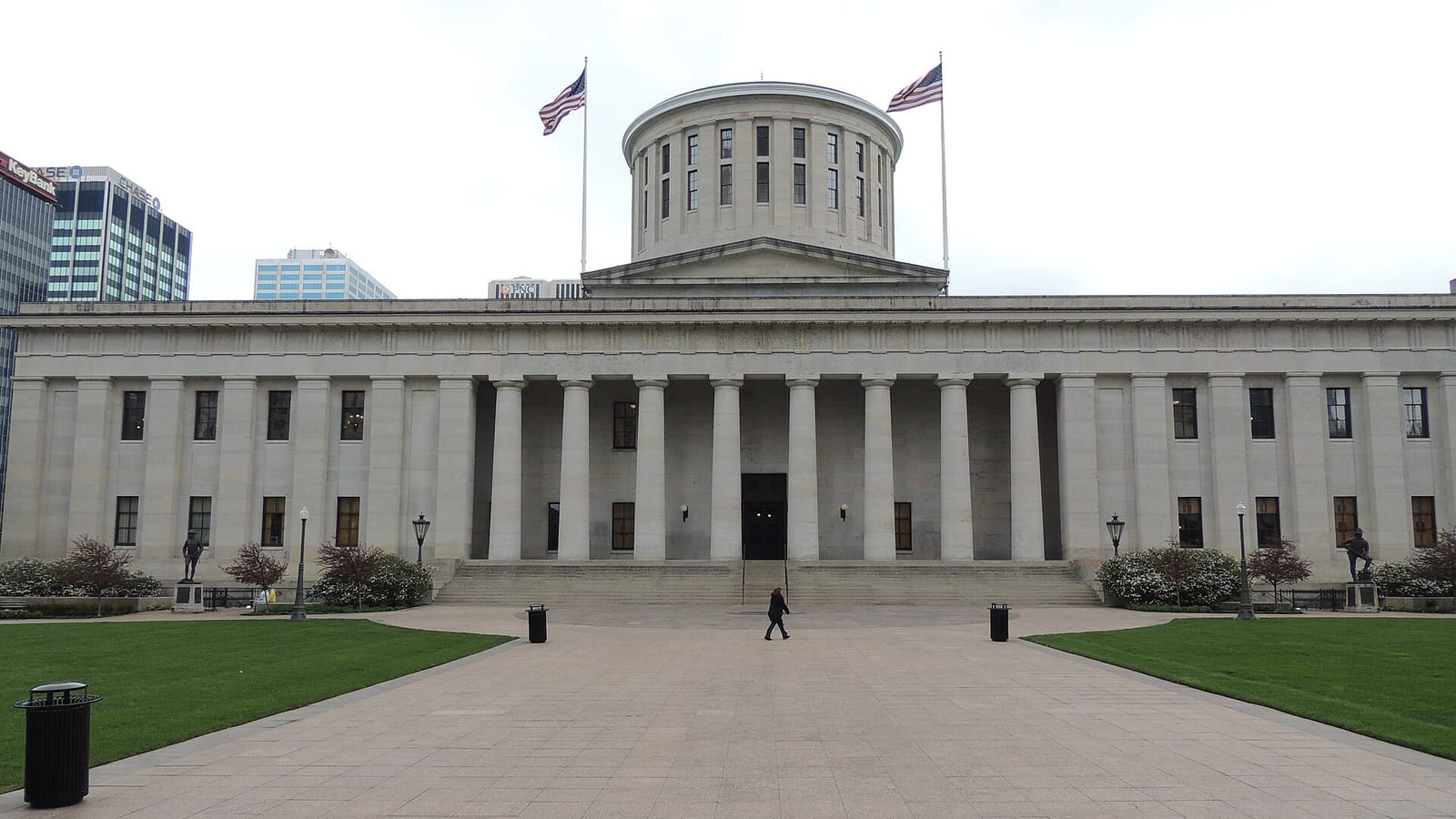
CFTC guidance on Ohio sports event contracts arrived on November 5, 2026, in a state that has spent the fall shutting those contracts to its own residents. The Commodity Futures Trading Commission told the exchanges it regulates that blocking traders by state breaks its impartial-access rule, and that they must also make sure the brokers on their markets are not doing the blocking for them. In Ohio, the most visible block of that kind is a broker's: Robinhood stopped letting Ohio residents open new sports event contracts on November 2, under an October 26 agreement with the Ohio Casino Control Commission.
The guidance is CFTC press release 9323-26 and a six-page interpretation of Commission Regulation 38.151(b), approved by the Commission and, in its own words, effective on the date it is published in the Federal Register. As of November 6, 2026, the Federal Register listed no such publication. For Ohio, it lands on top of two things it does not itself overturn: the Casino Control Commission's enforcement of state gaming law, and the Sixth Circuit's September 25, 2026 ruling that Kalshi had not shown federal law displaces that law.
What the CFTC told the exchanges
The release says designated contract markets "must cease domestic geographic restrictions that violate the Impartial Access Requirements within 30 days, or else submit to the Division of Market Oversight" an explanation of why they cannot. Within the same 30 days, it says, exchanges "should ensure that intermediaries accessing their markets are not impeding" those requirements. Chairman Michael S. Selig said in the release that "geographic access restrictions are inconsistent with those purposes and the Act's impartial access requirements." The release adds that the Commission "will consider the facts and circumstances of any particular case in connection with potential Commission action."
The interpretation's case rests on liquidity and price discovery, and its examples are the kinds of contracts Ohio residents follow on this site. It says contracts that "attract disproportionately regional interest (e.g., whether a home team advances to its playoffs)" lose liquidity when that region is shut out, and that "statewide and more localized election markets may generate the most volume and/or knowledge from residents of the State or locality where the election takes place." It also points to regions prone to extreme weather and regions with substantial energy production, and concludes that "geographic access restrictions are inconsistent with the CEA and Commission rules and regulations."
How Ohio's limits were built
Ohio's limits did not begin with the exchanges. The Casino Control Commission's cease-and-desist letter to Kalshi of March 31, 2025, filed in Kalshi's federal suit, said that "by offering 'event contracts' on sporting events to citizens located within the State of Ohio, without a sports gaming license," Kalshi was violating Ohio law. Kalshi sued the commission in federal court in Columbus and lost its bid for a preliminary injunction there and on appeal.
The commission widened its reach this fall. On October 2, 2026, a week after the appeals ruling, it sent cease-and-desist letters to ten companies, "including Polymarket, Coinbase and Robinhood," the Ohio Capital Journal reported on October 20. The paper reported that "most platforms were still up and unchanged" after the deadline, and that Plus500US told the commission it would stop its sports contracts. NEXTPredict.io reported on October 23 that Gemini emailed its Ohio customers that "effective November 6, 2026, Gemini Titan will no longer offer sports-related event contracts to customers in your location." Gemini's own notice was not located.
Kalshi faces a second Ohio track. According to a complaint Underdog Exchange DCM, Inc. filed in the Northern District of Ohio on September 8, 2026 (No. 1:26-cv-02169), the commission issued Kalshi a notice on April 14, 2026 of its intent to impose a five-million-dollar penalty or fine (Case No. 2026-SGR-001). That account is Underdog's; the notice itself has not been published.
Robinhood's Ohio deal and the guidance's broker clause
Robinhood's Ohio limit sits next to the part of the guidance aimed at brokers. Its quarterly report for the period ended September 30, 2026, filed with the Securities and Exchange Commission on October 28, says its derivatives unit "received a cease and desist letter from the Ohio Casino Control Commission" on October 2, and that on October 26 it "agreed to cease offering new sports-related event contracts in Ohio by November 2, 2026 in exchange for the Commission's agreement to refrain from enforcing its state gaming laws during the pendency of RHD's and other prediction-market operators' appeals in the Sixth Circuit and the Supreme Court of the United States."
Robinhood's help pages, as they read on November 6, 2026, still carry the Ohio line: "As of November 2, 2026, Ohio residents can't open new sports event contracts." The same pages apply the trading prohibitions of "each exchange" to Robinhood customers, citing Kalshi's Appendix B and ForecastEx's rulebooks, a sign that the contracts Robinhood's customers trade are listed on those exchanges.
The interpretation's footnote 15 is where that matters. It says exchanges "must take reasonable steps to ensure that intermediaries, who must comply with DCM membership rules, do not impose geographic restrictions that violate impartial access," and that "the Commission believes that DCMs are responsible for ensuring that intermediaries are not impeding the DCM's impartial access requirements."
What the documents do not settle is how those two texts meet. The interpretation names no company and no state. Robinhood's filing ties its Ohio limit to the pending appeals, not to any federal rule, and nothing on Robinhood's help pages on November 6 says whether its Ohio entry will change. Whether the guidance reaches an agreement a broker made with a state regulator is a question neither document answers, and this site draws no conclusion on it. The 30-day duty the release describes falls on the exchanges, which must either act or explain themselves to the Division of Market Oversight.
Robinhood's Ohio restriction is also narrower than the guidance's election example. Its help page lists Ohio under "sports" only, while Utah's entry covers "sports, culture, elections, and politics."
What the Sixth Circuit already decided for Ohio
The court record is older than the guidance and it is Ohio's own. On September 25, 2026, a Sixth Circuit panel ruled in KalshiEX LLC v. Schuler, Nos. 26-3196/5235: "we affirm the Southern District of Ohio's denial of Kalshi's motion for a preliminary injunction, vacate the Middle District of Tennessee's grant of Kalshi's motion, and remand for further proceedings consistent with this opinion." The panel held that the Commodity Exchange Act "neither expressly nor impliedly preempts Ohio's or Tennessee's gambling laws." That is a ruling on early relief, not a final judgment.
The panel also read the same rule the CFTC has now interpreted. Kalshi had argued that Ohio's requirement that sports wagers be initiated, received and completed inside the state was impossible to meet for an exchange bound by Regulation 38.151(b). The court disagreed: "impartial-access regulations do not appear to require a designated contract market like Kalshi to offer any 'particular market' for the event contracts it lists," it wrote, and the regulation "is about economic rather than geographical impartiality." It noted that other companies had used geofencing to satisfy both federal and state rules, and that "expensive does not mean impossible." The November 5 interpretation reads the rule the other way: "The CEA and Commission Regulations generally do not permit a DCM to limit access based on the location of an otherwise eligible market participant within the United States."
Kalshi asked the full Sixth Circuit to rehear the case in a petition filed October 9, 2026, according to Wolters Kluwer's VitalLaw. The appeals docket could not be read on November 6, so this story does not say whether the court has acted on it.
The interpretation is the CFTC's reading of its own rules, and the Sixth Circuit's is a court's. The interpretation is not a court order, and on its face it does not reverse the Sixth Circuit or repeal Ohio's sports gaming statute, R.C. Chapter 3775. Whether federal law preempts Ohio's law is a question for the courts, and the panel has answered it once for Kalshi's sports contracts at the preliminary stage.
That tension is the one Sen. Adam Schiff seized on. He said on X, quoting Selig's post about the guidance, that "Sports prediction markets are sports bets" and called the move "the CFTC's most egregious attempt yet to undermine state law, the Tribes, and now, the courts." Selig had written on X that "geographic access restrictions undermine the national uniformity and consistency that the Act is intended to facilitate."
The Ohio markets the guidance describes
Two of Ohio's boards on this site are the kinds of contract the interpretation uses as examples. The Cincinnati Bengals playoff market page prices whether a home team reaches its playoffs, the interpretation's own sports example. The Ohio governor market page carried a statewide election, the kind the interpretation says draws "the most volume and/or knowledge from residents of the State." This story makes no claim that the guidance has moved either board's price.
Who in Ohio has responded
The Ohio Attorney General's news releases page, checked at 1:16 p.m. Eastern on November 6, 2026, carried no statement on the guidance; its newest release, dated November 4, was Attorney General Andy Wilson's statement on the election of John Kulewicz, "who will serve as Ohio's 53rd attorney general." Wilson told the Ohio Capital Journal in October, about the companies that kept offering contracts, that "the law is on our side, and they've lost up to this point." The Casino Control Commission's and the governor's websites returned error pages on November 6, so this story does not report whether either has commented. CoinDesk reported on November 6 that a Kalshi spokesperson did not respond to a request for comment on its compliance plans.
What happens next
The clock in the release is 30 days. It does not say whether those days run from November 5 or from Federal Register publication; counted from the release date, they end on December 5, 2026. By then, under the release, each exchange is to drop its domestic state limits or send the Division of Market Oversight its reasons, and to answer for its brokers the same way.
The earlier steps are on the Ohio legal status page, the Kalshi in Ohio page and in this site's report on Robinhood's Ohio agreement.
Ohio's own calendar runs alongside it. The Ohio Senate's next floor session is scheduled for November 10, 2026, at 1:30 p.m., followed by sessions on November 18, December 2 and December 16, with December 9 and December 17 marked "if needed." Senate Bill 430, from Sen. William P. DeMora, would amend Ohio's sports gaming chapter "to specify that using a prediction market to trade event contracts on sporting events constitutes sports gaming subject to regulation in this state," and sits in the Senate Select Committee on Gaming. This story is not legal advice.
Questions readers are asking
What did the CFTC say about state restrictions on prediction markets?
In press release 9323-26 on November 5, 2026, the CFTC said designated contract markets must end domestic geographic restrictions within 30 days or explain to its Division of Market Oversight why they cannot, and must make sure intermediaries are not imposing such restrictions either.
Does the CFTC guidance override Ohio law or the Sixth Circuit ruling?
No court has said so. The interpretation is the CFTC's reading of Regulation 38.151(b), effective on Federal Register publication, while the Sixth Circuit wrote on September 25, 2026 that the same regulation is about economic rather than geographical impartiality and that federal law does not preempt Ohio's gambling laws as applied to Kalshi's sports contracts.
Can Ohio residents trade sports event contracts on Robinhood after the CFTC guidance?
Not new ones as of November 6, 2026: Robinhood's help page still says Ohio residents can't open new sports event contracts as of November 2, under its October 26 agreement with the Ohio Casino Control Commission.
Has Ohio responded to the CFTC guidance?
The Ohio Attorney General's news releases page carried no statement on it at 1:16 p.m. Eastern on November 6, 2026, and the Casino Control Commission's and the governor's websites returned error pages that day.
When is the CFTC's 30-day deadline?
The release gives exchanges 30 days but does not say whether they run from November 5 or from Federal Register publication; counted from the November 5, 2026 release, they end December 5, 2026.