StoryLocal news
Brown takes back an Ohio Senate seat on a board that kept Husted a live underdog to the end
Kalshi had Brown's side at 70% on November 2, 2026, well below the 83% on Acton, which means the market priced the Senate as the closer Ohio race, and Brown's five-point unofficial margin against her nearly eight bore that out.
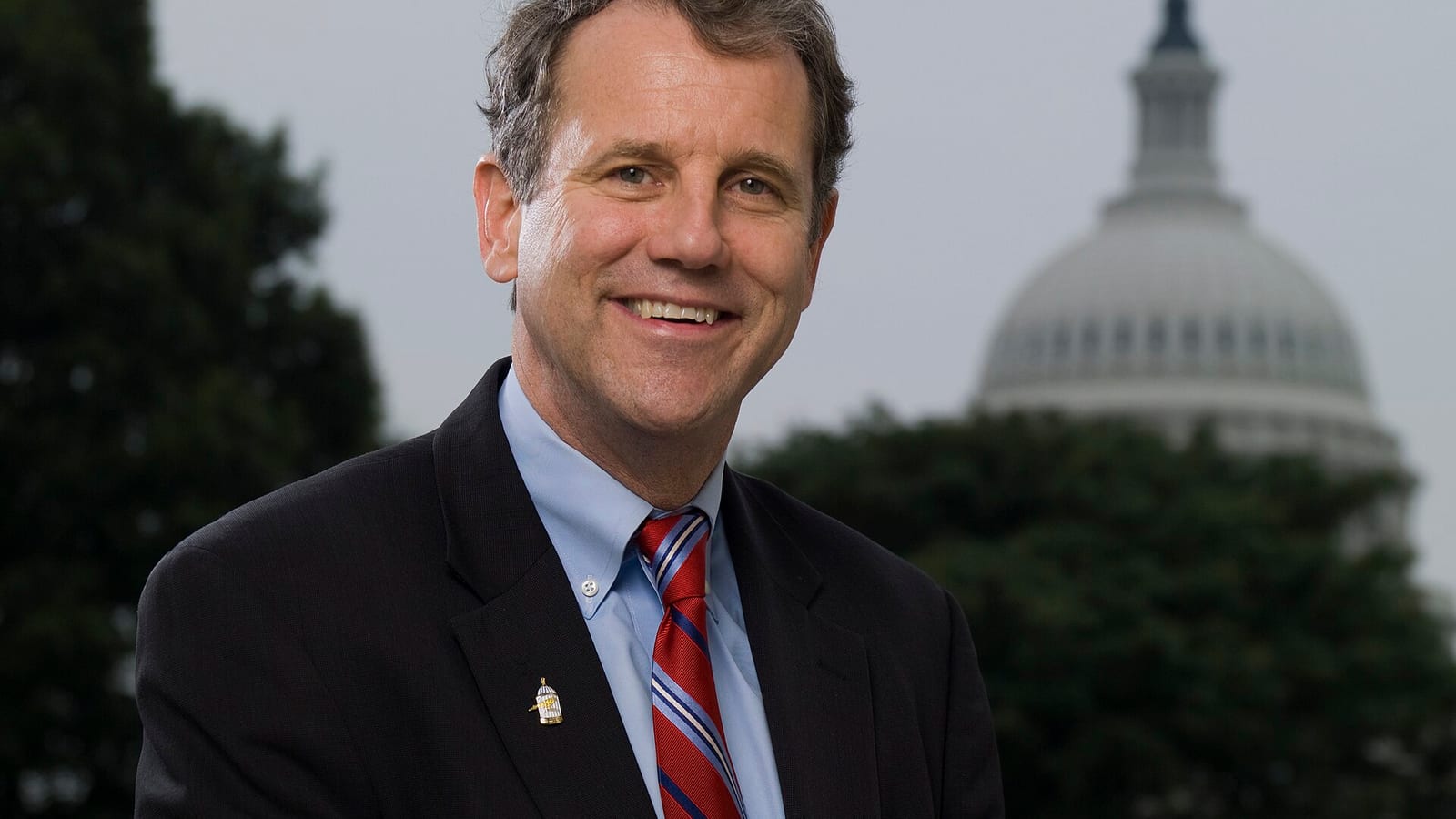
Sherrod Brown won back a U.S. Senate seat for Ohio Democrats on Tuesday, November 3, defeating Republican Sen. Jon Husted in the special election for the term that ends January 3, 2029; The Associated Press projected Brown the winner at 11:11 p.m. that night. The Ohio Secretary of State's unofficial results, read at 9:55 a.m. Eastern on November 5, 2026 with all 8,834 precincts reporting, show Brown ahead by 223,294 votes. The Senate market had made Brown the favorite going in, but by a smaller margin than the governor's race next to it on the ballot, and the count bore that ordering out.
The count on November 5, 2026 stood at 2,301,042 votes for Brown and 2,077,748 for Husted, or 50.0% to 45.2%, with Libertarian William B. Redpath at 2.8% and Greg Levy at 2.1%, which leaves Brown ahead by just under five points of the vote. Husted had held the seat since DeWine appointed him at the start of 2025 to replace JD Vance, who left the Senate to become vice president, the Ohio Capital Journal reported. These results are unofficial until the state's canvass is complete.
What the Ohio Senate market had priced
The two venues went into Election Day close together but not identical. On the evening of November 2, 2026, the last reading before polls opened, Kalshi had the Democratic side at 70% and Polymarket at 72%, so Kalshi carried the best price on Brown; on the Republican side Polymarket was cheapest at 28%, with Kalshi at 31%. That treated Brown as about a seven-in-ten favorite, which means the market left Husted roughly a three-in-ten chance, a much larger upset case than the one-in-six it gave Vivek Ramaswamy in the governor's race on the same night.
Over the final three weeks the price moved in Brown's direction but never as far as the governor's board did. Kalshi's best price on Brown's side went from 60% on October 12, 2026, when the board listed him by name, to 70% on November 2, 2026, which means a ten-point climb across the closing stretch of a race both venues kept treating as competitive. The site's earlier coverage followed the Trump rally in Youngstown and the steady Suffolk lead along the way.
In the November 5, 2026 read, Kalshi and Polymarket both quoted the Democratic contract at 100% and the Republican contract at 0%, and the board is listed as resolved. That price means the market is recording the outcome rather than forecasting it; it does not show by itself when either venue pays out, which each does under its own rules. Kalshi's board had traded about 18.4 million contracts in its lifetime, and Polymarket's Democratic side had drawn about $2.56M, each in its own unit.
Why the margin matched the market's ordering
The market's two Ohio prices made a claim beyond who would win: that the Senate race was the closer of the two. The count agrees. Acton's unofficial margin over Ramaswamy is 364,448 votes, close to eight points; Brown's over Husted is 223,294, just under five. Brown received 103,136 fewer votes than Acton on the same ballots, while Husted received 38,018 more than Ramaswamy. Husted ran ahead of the top of his ticket, which is exactly the scenario the larger Republican price on the Senate board was paying for, but not by enough.
The county returns show where that gap came from. Brown carried the same 15 counties Acton did, and he won Franklin County by 212,984 votes, Cuyahoga by 207,856 and Hamilton by 86,712, each smaller than Acton's margin in the same county. Husted did better than Ramaswamy in the large Republican counties: he carried Warren County by 20,268 votes, Butler by 15,129 and Stark by 7,701. Lee Hannah, a political scientist at Wright State University, told the Ohio Capital Journal on election night that Brown appeared to be gaining in suburban counties and cities rather than in rural Ohio.
A price of 70% on the winner was a correct call on a race that was still closer than the one beside it, which means the market's caution about the Senate race was earned: the Republican nominee ran stronger than his party's candidate for governor, and the Democrat still won by more than 200,000 votes.
How the Senate race was fought
The race was national from the start, and both campaigns spent like it. The Ohio Capital Journal, citing The Hill, reported that more than 500 million dollars had been spent on ads and ad reservations by the end of October, making it the second-most expensive Senate race of the cycle. Brown's campaign tied Husted to the votes he cast after his appointment, on tax cuts, health care, tariffs and the war in Iran, and to the FirstEnergy bribery scandal; at a rally on November 2, Brown pointed to Husted's testimony in the criminal trial of indicted FirstEnergy executives. Husted, the Capital Journal noted, came into the race with a 25-year career in Ohio politics.
The special election itself traces back to 2024, when Vance's move to the vice presidency left four years on his term and required a vote this year. The Capital Journal's account adds that President Trump's endorsement of Ramaswamy for governor cleared the field that Husted and then-Attorney General Dave Yost had been preparing to enter, which is how Husted ended up on the Senate ballot instead. The board's price never treated any of that history as decisive: it moved ten points in three weeks on polls, rallies and the national mood, and finished at seven in ten.
What Brown's win changes
Brown returns to a chamber his party now controls. States Newsroom, reporting through the Ohio Capital Journal on November 4, wrote that by Wednesday morning Democrats held 54 Senate seats to the Republicans' 44, with Mississippi and Alaska still outstanding, and that seven of the Democratic seats were flips from Republicans. Ohio's seat is one of them. Brown, 73, served in the Senate before; he was a state representative, Ohio secretary of state and a congressman before that, the Capital Journal reported.
Because this was a special election for the unexpired term, the seat is on the ballot again in 2028; the Secretary of State lists the contest as the unexpired term ending January 3, 2029. Ohio's other senator, Republican Bernie Moreno, is not affected by Tuesday's result.
What happens next
Nothing still to be counted is large enough to change this race. The Secretary of State's results page listed 102,148 outstanding ballots statewide on November 5, 2026, 3,779 absentee ballots from military and overseas voters and 98,369 provisional ballots, less than half of Brown's margin. Mailed ballots from military and overseas voters have up to four days after Election Day to arrive at the county boards, through November 7, and the county boards decide which provisional ballots count during the official canvass.
The Secretary of State says the official canvass is completed about three weeks after the election, and it has not published a certification date on its results page. Ohio orders an automatic recount in a statewide race only when the margin is under one-fourth of one percent, and Brown's unofficial lead is close to five points. The Ohio Senate market page carries the board and how it settles, and the elections page collects the state's other priced races, including the governor's race won by Amy Acton.
Questions readers are asking
Who won the Ohio Senate race in 2026?
Democrat Sherrod Brown defeated Republican Sen. Jon Husted, according to the Associated Press, which projected the race at 11:11 p.m. on November 3, 2026. Unofficial Secretary of State results on November 5 showed Brown with 2,301,042 votes to Husted's 2,077,748.
What were the Ohio Senate odds before the election?
On the evening of November 2, 2026, Kalshi had the Democratic side at 70% and Polymarket at 72%, while Polymarket had the Republican side at 28% and Kalshi at 31%, which treated Brown as about a seven-in-ten favorite.
How long is Brown's Senate term?
The seat was filled in a special election for the unexpired term, which the Secretary of State lists as ending January 3, 2029, so it is on the ballot again in 2028.
Did Brown's win help Democrats take the Senate?
Yes. States Newsroom reported on November 4, 2026 that Democrats held 54 Senate seats to the Republicans' 44 with two races outstanding, and that seven Democratic seats, including Ohio's, were flips from Republicans.
When will the Ohio Senate results be official?
The results stay unofficial until the Secretary of State certifies the official canvass, which the office says is completed about three weeks after the election; military and overseas mail ballots can arrive through November 7, 2026.